
Your Cart is Empty


There's something about waking up in the Australian outdoors that stays with you. That first breath of crisp morning air. The kookaburras starting their dawn chorus. Your billy boiling over a campfire while the mist lifts off the valley.
But if you've got sleep apnoea, you've probably thought camping was off the cards. Maybe you've turned down that fishing trip with your mates. Skipped the family camping holiday to the national park. Watched everyone else pack up their four-wheel drive while you stayed home, worried about how you'd power your CPAP machine in the middle of nowhere.
I get it. The standard CPAP setup isn't exactly bush-ready. But here's what a lot of people don't realise: camping with sleep apnoea is absolutely possible. You just need the right gear.
Look, missing a night or two of CPAP therapy might not seem like a big deal. You've probably convinced yourself you'll be fine for a weekend. But here's what happens when you skip your treatment:
Your oxygen levels drop during the night. You wake up feeling like you've been hit by a truck. That brain fog that makes everything harder? That's your body trying to function without proper sleep. You're irritable with your family. You're too exhausted to enjoy the hike you drove four hours to do. You might even fall asleep at the wheel on the drive home.
And if you've got a heart condition or high blood pressure? Going without CPAP therapy isn't just uncomfortable - it's genuinely risky.
The truth is, staying home because of sleep apnoea means missing out on life. Missing your kid's excitement at seeing the stars properly for the first time. Missing that sense of peace you get when you're away from the city. Missing memories you can't get back.
You don't have to do that anymore.
Everything you need to keep your therapy going while camping, travelling, or exploring the Australian outdoors. Free shipping Australia-wide.

The world's smallest CPAP machine. Perfect for weekend camping trips and travel.
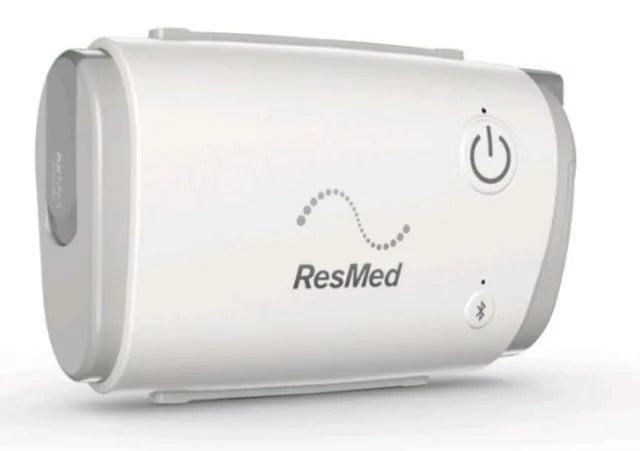
Machine-only package. Ideal if you already have compatible masks and accessories.

Affordable travel CPAP solution with mask included. Works with any standard mask.

Complete off-grid solution. Everything you need for camping including portable battery.

Best value travel CPAP. Machine only - use with your existing mask.
Our sleep therapy specialists can help you choose the perfect travel CPAP setup for your camping and adventure needs. Free Australia-wide shipping on all orders.
Here's the reality of camping with CPAP: you need a machine that won't weigh down your pack, and you need a way to power it when you're nowhere near a powerpoint.
Your bedside CPAP machine probably weighs over two kilograms and takes up half your bag. That's fine at home, but it's not coming camping with you.
Travel CPAP machines are different. We're talking devices about the size of a large phone that weigh less than a bag of sugar. They deliver the same therapy as your regular machine, just in a package that actually makes sense for the outdoors.
The two main options for Aussie campers are the ResMed AirMini and the BMC M1 Mini. Both are automatic pressure-adjusting machines, both are designed for travel, and both work with portable battery packs.
The AirMini is ResMed's answer to travel CPAP. It's tiny - seriously, you can fit it in your hand - and it weighs just 300 grams. That's about three apples.
What makes it worth the money? It's got ResMed's AutoSet algorithm that adjusts pressure automatically throughout the night. There's an app that lets you control settings from your phone (handy when you're in a tent). It's also got waterless humidification through special HumidX filters, which means one less thing to carry and no worrying about spilling water in your swag.
The catch? It needs specific ResMed masks to work properly - you can't just use any mask you've got lying around. And it's the pricier option.
ResMed AirMini starts at $990 for the machine alone, or $1,030 with the full travel setup.
If you're not keen on spending over a grand, the BMC M1 Mini does the job for considerably less cash. It's slightly bigger than the AirMini but still compact enough for camping. It's got automatic pressure adjustment and works with pretty much any CPAP mask, which gives you more flexibility.
The humidification system is traditional rather than waterless, so you're carrying a small water chamber. Not a dealbreaker for most people, but worth knowing about.
BMC M1 Mini is $765 for the machine, or $850 if you grab it with a BMC mask included.
Having a travel CPAP machine is only half the story. The other half is keeping it running when you're fifty kilometres from the nearest town.
Portable CPAP batteries are designed specifically for this. They're rechargeable lithium battery packs that connect directly to your machine. Depending on your pressure settings and whether you use humidification, you'll typically get 1-3 nights from a full charge.
For weekend trips, one battery pack is usually enough. For longer adventures, you might want two or a way to recharge during the day (solar panel or your car's 12V outlet while you're driving).
The ResMed AirMini Travel Pack with battery is $1,399 and includes everything you need to get started.
If you're camping from your car or caravan, you can run your CPAP machine directly from your vehicle's 12V outlet (the cigarette lighter socket). You'll need a DC-DC converter specific to your machine, but this means unlimited power as long as your car battery has juice.
Most four-wheel drives and camper trailers have dual battery systems specifically for this kind of thing. Just make sure you're drawing from your auxiliary battery, not your starter battery - waking up to a flat battery in the middle of the bush is a special kind of nightmare.
Let's walk through a typical scenario. You're planning a weekend camping trip to the Grampians with your family. Here's what you need:
That's it. There's no complicated setup, no generator roaring all night, no anxiety about whether you'll wake up feeling like rubbish.
This is the big one. Blokes especially tend to think they can tough it out for a few nights. Then they spend the entire trip exhausted, their partner is cranky because they snored all night, and they drive home feeling dangerous on the road. Not worth it.
You don't want to discover your battery pack isn't charged or your machine isn't working properly when you're two hours from the nearest town. Do a full test run at home. Set everything up, run it overnight, make sure you know how it all works.
Tents get condensation. Swags definitely get condensation. If moisture gets into your CPAP machine, you've got problems. Keep your machine elevated and protected. A stuff sack or small dry bag works well.
This seems smart until you wake up with a throat like sandpaper. If you need humidification at home, you probably need it camping too. Either use waterless humidification (like the AirMini's HumidX system) or accept that traditional humidification will drain your battery faster and plan accordingly.
If you're planning something more serious - a week crossing the Simpson Desert, months travelling around Australia, that kind of thing - you need to think bigger.
A 100-120W solar panel with a battery bank will keep your CPAP running indefinitely. You're looking at $300-600 for a decent solar setup, but it's worth it for extended trips. During the day, your solar panel charges your battery bank. At night, your battery bank runs your CPAP machine. As long as you get enough sun to recharge each day, you're sorted.
Alternatively, carry 2-3 CPAP battery packs and rotate them. Charge them from your vehicle while you're driving, from solar when you're stopped, or top them up when you pass through towns with power.
Always, always have a backup. Carry your regular CPAP machine and charger in case you end up somewhere with mains power. Bring spare masks and tubing. Know where the nearest medical supply stores are along your route, just in case.
Here's what nobody tells you about getting camping-ready CPAP gear: it changes how you think about travel.
That invitation to a friend's beach house? You can say yes now, even if they don't have a spare room with power nearby. Your kid's school camp asking for parent volunteers? You can actually consider it. That bucket list trip you've been putting off? There's no reason to wait anymore.
I've talked to people who haven't been camping in years because of their sleep apnoea. They've got all this gear - tents, swags, fishing rods - just sitting in the shed gathering dust. Then they discover travel CPAP machines exist and suddenly they're planning trips again. They're spending time with their kids in nature. They're waking up at sunrise to catch fish. They're living instead of just watching everyone else live.
That's not an exaggeration. That's what happens when you stop letting sleep apnoea dictate what you can and can't do.
It depends on what kind of adventuring you're planning and what you're comfortable spending.
Go with the BMC M1 Mini and a single battery pack. It's affordable, it works with any mask, and it'll handle your needs without breaking the bank. You're looking at around $1,200-1,400 all up.
The ResMed AirMini with the battery pack is worth the investment. The waterless humidification means less hassle, it's smaller and lighter, and ResMed's reputation for reliability matters when you're relying on it in the bush. Budget around $1,500-1,600.
Get the ResMed AirMini setup plus invest in a proper solar charging system. You'll also want a second battery pack for redundancy. This is a bigger upfront cost (around $2,000-2,500), but you'll have unlimited freedom to roam.
Any of the travel machines plus a DC-DC converter for vehicle power. Your car becomes your charging station. Add a battery pack for nights when you're away from the vehicle.
How long your battery lasts depends on several factors:
As a rough guide, expect 1-2 nights per charge with humidification on, or 2-3 nights without. The manufacturers always quote best-case scenarios - assume you'll get less than advertised.
If you're camping in the high country (looking at you, Victorian Alps and Snowy Mountains), check your machine's altitude rating. Most travel CPAP machines work fine up to 2,500-3,000 metres, but it's worth confirming.
CPAP machines don't love extreme heat or cold. Don't leave your machine in a closed car on a 40-degree day. In winter camping, keep your machine in your sleeping bag or swag where your body heat keeps it warm. Batteries also perform worse in the cold, so expect reduced run time in winter.
If you're flying anywhere with your CPAP gear, you need to know this stuff:
Both the ResMed AirMini and BMC M1 Mini are approved for use on commercial flights. There's usually a compliance label on the device. Keep this documentation handy when you travel.
Lithium batteries are restricted on flights. CPAP-specific batteries are generally allowed, but you'll need to carry them in your hand luggage, not checked baggage. Check with your airline before you fly.
Your CPAP machine counts as medical equipment, which means it doesn't count toward your luggage allowance on most airlines. But you need to declare it when you check in.
If you're reading this thinking "yeah, I want to start camping again," here's what to do:
Sleep apnoea doesn't have to mean the end of camping, fishing trips, or exploring this incredible country. The gear exists to make it work. It's not even that complicated - travel CPAP machine plus portable power equals freedom to roam.
Yeah, there's an upfront cost. But what's the alternative? Staying home forever? Missing out on experiences with your family and mates? That's a higher price than any CPAP setup.
The Australian outdoors is waiting. The fishing spots, the mountain trails, the remote beaches, the desert sunsets - they're all still there. You can experience them while still getting the sleep therapy you need. You don't have to choose between your health and your adventures anymore.
Ready to sort this out? Browse the travel CPAP machines and battery packs at Easy CPAP. They ship free Australia-wide, they know their stuff, and they can help you figure out exactly what you need.
Or give them a call on 1300 064 779 if you've got questions. They're based in Brisbane and Sydney, and they understand that CPAP therapy shouldn't keep you from living your life.
This article provides general information about using CPAP equipment while camping and travelling. It is not medical advice and should not replace consultation with your healthcare provider.
Before using CPAP equipment in outdoor or off-grid environments, you should:
Pre-existing medical conditions may affect your suitability for remote travel. Conditions including but not limited to severe heart disease, uncontrolled high blood pressure, or complex sleep-disordered breathing may require additional medical precautions.
Always follow the manufacturer's instructions for your CPAP device and power sources. Improper use of battery packs, solar panels, or DC converters may damage equipment or create safety hazards.
Continuous Positive Airway Pressure (CPAP) therapy is a medical treatment prescribed for Obstructive Sleep Apnoea and related conditions. Interrupting or modifying your therapy without medical supervision may result in health complications.
When travelling to remote locations, ensure you have:
All product specifications, prices, and features mentioned in this article are current as of January 2026 and are subject to change. Verify all details with Easy CPAP or your supplier before purchase.
This article is published by Easy CPAP Pty Ltd (ABN 95 624 080 002), an authorized supplier of CPAP equipment in Australia. For medical advice regarding sleep apnoea treatment, consult with a qualified healthcare provider registered with the Australian Health Practitioner Regulation Agency (AHPRA).